

Your Complete Beginner’s Guide to Building a Flawless Routine
A Makeup Product can help you enhance your natural beauty and create a look that suits your style. From primer and foundation to concealer, mascara, and lipstick, choosing the right makeup products makes it easier to build a simple and effective beauty routine. Whether you are a beginner or a makeup enthusiast, this guide covers essential makeup items, popular makeup looks, and step-by-step tips for applying makeup confidently. A good Makeup Product should suit your skin type, preferred look, and daily routine. For more information about cosmetic safety, visit the U.S. FDA’s cosmetics resources
What Are the 10 Essential Makeup Products?
Choosing the right Makeup Product helps you create a balanced look without buying unnecessary items. Building a starter makeup kit doesn’t require a vanity full of products. Focus on these ten essentials that cover every base for a complete, everyday look.
- Primer
Think of primer as the canvas for your makeup. It smooths texture, minimizes pores, and helps your foundation last longer. Choose a hydrating formula for dry skin or a mattifying one if you’re oily. - Foundation or Tinted Moisturizer
This evens out your skin tone. Foundations offer more coverage, while tinted moisturizers or skin tints give a lightweight, natural finish perfect for beginners. Match the shade to your jawline for the most accurate blend. - Concealer
Use concealer to brighten under-eyes and cover blemishes. Pick a shade one tone lighter than your foundation for under-eyes, and an exact match for spots. Creamy formulas blend easily and look natural. - Setting Powder
A light dusting of translucent powder locks in your base and reduces shine, especially in the T-zone. It prevents creasing and helps your makeup stay put through the day. - Blush
Blush adds a healthy flush to your cheeks. Cream blushes are forgiving and blend seamlessly with fingers, while powders offer buildable colour. Peachy or pink shades mimic a natural flush. - Bronzer or Contour
Bronzer warms up the face, while contour adds subtle definition. Apply bronzer where the sun naturally hits forehead, cheekbones, and nose. Contour goes under cheekbones and along the jawline for structure. - Highlighter
A touch of highlighter on the high points of your face, cheekbones, brow bone, and cupid’s bow adds a luminous glow. Start with a subtle formula to avoid looking overly shiny.maybelline. - Eyeshadow Palette (Neutrals)
A small palette with neutral tones (browns, taupes, soft pinks) lets you create everything from a simple wash of colour to a defined crease. Neutrals are versatile and beginner-friendly. - Mascara
Mascara opens up your eyes instantly. Black or brown formulas add length and volume. Curl your lashes first for maximum impact, and apply one or two coats for a natural look. - Lip Product (Balm, Tint, or Lipstick)
Finish your look with a lip balm for hydration, a tint for subtle colour, or a lipstick for more definition. Tinted balms are great for beginners. They’re low-maintenance and forgiving.
These ten items form a complete routine that works for school, work, or casual outings. As you gain confidence, you can add extras like eyeliner, brow gel, or setting spray. but this core kit is all you need to start.

What Are the 4 Types of Makeup Products and Looks?
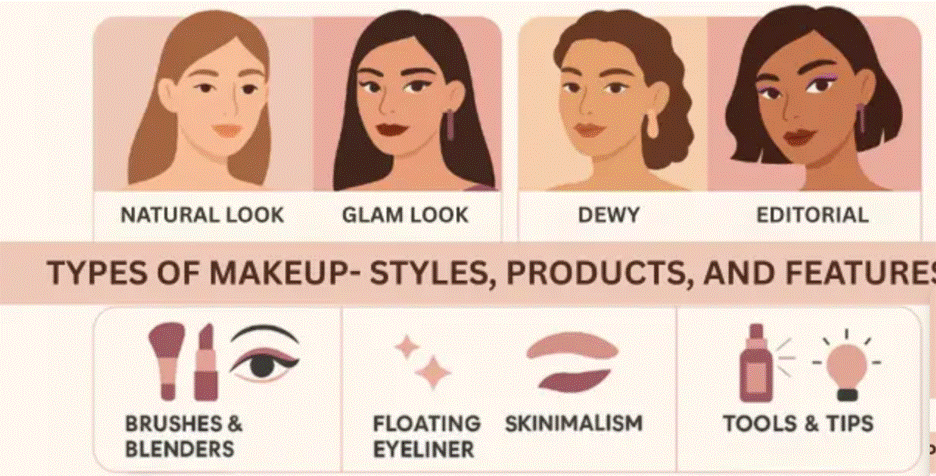
Each Makeup Product plays a different role in creating natural, glam, editorial, or bridal makeup. Makeup isn’t one-size-fits-all. Depending on the occasion, mood, or personal style, you might lean into one of four main types of makeup looks. Each serves a different purpose and uses products in unique ways:
1. Natural (No-Makeup Makeup)
The natural look is all about enhancing your features without looking “done up.” It’s perfect for everyday wear, school, or casual errands. The goal is fresh, glowing skin with minimal product.
Key products: Tinted moisturizer or skin tint, creamy concealer, brow gel, cream blush, mascara, and a tinted lip balm.
● Technique: Use light layers and blend thoroughly. Focus on skincare prep clean, moisturized skin makes this look effortless.
● Best for: Daily wear, video calls, or when you want to look polished but understated.
2. Glam (Full Glam)
Glam makeup is bold, defined, and camera-ready. Think full-coverage base, sculpted cheeks, dramatic eyes, and statement lips. It’s ideal for parties, events, or nights out.
● Key products: Full-coverage foundation, concealer, setting powder, contour, blush, highlighter, eyeshadow palette (with shimmers), eyeliner, false lashes or volumizing mascara, and a bold lipstick or gloss.
● Technique: Build coverage gradually, set heavily with powder, and use precise application for sharp lines (like winged liner or defined lips).
● Best for: Special occasions, photoshoots, or when you want to make a statement.
3. Editorial (Creative/Artistic)
Editorial makeup is experimental and trend-driven. It’s often seen in fashion magazines, runways, or artistic photoshoots. This look pushes boundaries with colour, texture, and unconventional placement.
● Key products: Bold eyeshadows (neons, metallics), graphic liners, unconventional blush placement, glitter, and unique lip colours (blacks, blues, or deep berries).
● Technique: Play with asymmetry, negative space, or unexpected colour combinations. Tools like sponges, brushes, and even fingers help create texture.
● Best for: Creative projects, festivals, or when you’re feeling adventurous.
4. Bridal (Soft Glam/Timeless)
Bridal makeup is designed to last all day and photograph beautifully. It’s typically a softened version of glam—elegant, refined, and timeless. The focus is on flawless skin, defined eyes, and a romantic lip.
● Key products: Long-wear foundation, waterproof concealer, setting powder, soft contour, blush, subtle highlighter, neutral eyeshadows, waterproof mascara or lashes, and a long-lasting lip colour (often in rose, nude, or classic red).
● Technique: Prioritize longevity with primer, setting spray, and waterproof formulas. Keep colours soft and blended for a romantic effect.
● Best for: Weddings, anniversaries, or any milestone event where you want to look effortlessly beautiful in photos.
Understanding these four types helps you choose the right products and techniques for any occasion. You might wear natural makeup on weekdays and glam on weekends or mix elements to create your own signature style.
How to Apply Makeup Products Step by Step
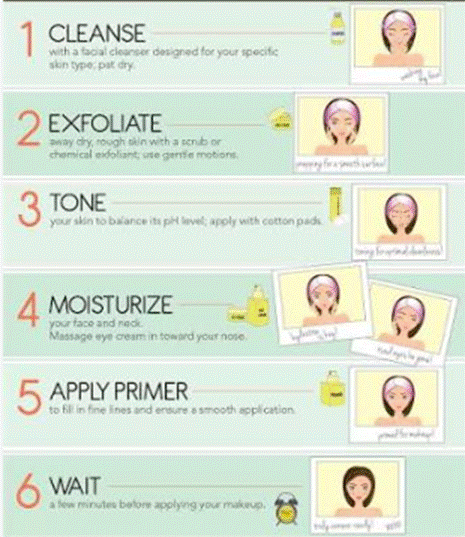
Mastering makeup basics means understanding the order of application, the purpose of each product, and how to blend for a seamless finish. Before applying any Makeup Product, prepare your skin with moisturizer and daytime sunscreen. Here’s a step-by-step breakdown of the foundational routine every beginner should know:
Step 1: Skin Prep
Great makeup starts with great skin. Cleanse to remove dirt, moisturize to hydrate, and apply sunscreen in the morning. Well-prepped skin helps makeup glide on smoothly and last longer.
● Cleanse: Use a gentle cleanser suited to your skin type.
● Moisturize: Hydrated skin prevents makeup from looking cakey.
● Sunscreen: Protects your skin and creates a smooth base.
Step 2: Primer
Primer creates a barrier between skincare and makeup, smoothing texture and helping products adhere. Apply a pea-sized amount and blend evenly. Let it set for a minute before moving on.
● Hydrating primers: Best for dry or mature skin.
● Mattifying primers: Ideal for oily or combination skin.
● Illuminating primers: Add a subtle glow under foundation.
Step 3: Base (Foundation or Tinted Moisturizer)
Apply foundation or tinted moisturizer to even out your skin tone. Use a damp beauty sponge, brush, or fingers to blend outward from the center of your face. Build coverage gradually starts light and adds more only where needed.
● Application tip: Dot product on forehead, cheeks, nose, and chin, then blend outward.
● Shade matching: Test on your jawline in natural light for the best match.
Step 4: Concealer
Use concealer to brighten under-eyes and cover blemishes. Apply a small amount and blend with a brush or sponge. Set with a light dusting of powder to prevent creasing.
● Under-eyes: Apply in a triangle shape and blend upward.
● Blemishes: Dab directly on spots and blend edges only.
Step 5: Set with Powder
Lightly dust translucent powder over your T-zone and under-eyes to lock in your base. This step reduces shine and prevents makeup from sliding.
● Tool tip: Use a fluffy brush for a light application or a powder puff for more coverage.
Step 6: Add Colour (Blush, Bronzer, Highlighter)
Blush brings life to your cheeks, bronzer adds warmth, and highlighter gives a glow. Apply blush to the apples of your cheeks, bronzer where the sun hits, and highlighter on the high points.
● Blush: Smile and apply to the apples, blending upward.
● Bronzer: Sweep along cheekbones, temples, and jawline.
● Highlighter: Tap on cheekbones, brow bone, and cupid’s bow.
Step 7: Eye Makeup (Brows, Eyeshadow, Mascara)
Groomed brows frame your face. Fill them in with a pencil or gel for definition. Apply a neutral eyeshadow wash for subtle depth, then finish with mascara to open up your eyes.
● Brows: Use short, feathery strokes to mimic natural hair.
● Eyeshadow: Start with a light base, then add a slightly darker shade in the crease.
● Mascara: Wiggle the wand from root to tip for even coverage.
Step 8: Lips
Line your lips if you’re using a bold colour, then fill in with lipstick or gloss. For a natural look, a tinted balm works perfectly.
● Tip: Exfoliate lips gently before applying colour for a smooth finish.
Step 9: Set Your Makeup
Finish with a setting spray to melt all the layers together and extend wear. Hold the bottle at arm’s length and mist evenly over your face.maybelline.
● Benefit: Setting spray reduces powderiness and helps makeup last through heat, humidity, or long days.
Makeup Product Tips for Beginners
● Blend, blend, blend: Harsh lines are the enemy of natural-looking makeup. Use a damp sponge or clean brush to soften edges.
● Less is more: Start with a small amount of product. you can always add more, but it’s harder to take away.
● Tools matter: Invest in a few quality brushes or sponges. They make application easier and more precise.
● Practice: Makeup is a skill. The more you practice, the better you’ll understand what works for your face and style.
The best Makeup Product for beginners is easy to apply, comfortable to wear, and simple to blend.
By following these basics, you’ll build a strong foundation for any makeup look. As you grow more confident, experiment with colours, techniques, and products to make your routine uniquely yours.
With these ten essential items, an understanding of the four main makeup types, and a solid grasp of the basics, you’re ready to create looks that range from effortlessly natural to boldly glamorous. Remember, makeup is a tool not a rulebook. Use it to express yourself, enhance your features, and feel confident in your own skin. Always choose a Makeup Product that meets your needs and follow its usage instructions.